
Whait, again? How many independence days Lithuania has? Wasn’t it on February 16th? We asked our tour guides to explain it all and offer some things to do in Vilnius on this particular day!
Why does Lithuania have two independence days?
To understand the significance of this day we need to explain how we lost our independence in the first place. It all started back in August 1939 when the Soviet Union and Nazi Germany signed the secret Molotov–Ribbentrop Pact dividing Eastern Europe into spheres of influence. The Baltic states (Lithuania, Latvia and Estonia) were assigned to the Soviet sphere of influence and subsequently were occupied in June 1940. After the Second World War Lithuanians tried to resist this new regime and reinstate independence by initiating guerrilla warfare. However, those attempts were unsuccessful and the leadership of the partisans was destroyed in 1953, thus effectively ending the underground partisan war. Since then nonviolent resistance continued - secret, illegal movements which focused more on social issues, human rights, cultural affairs rather than political demands.
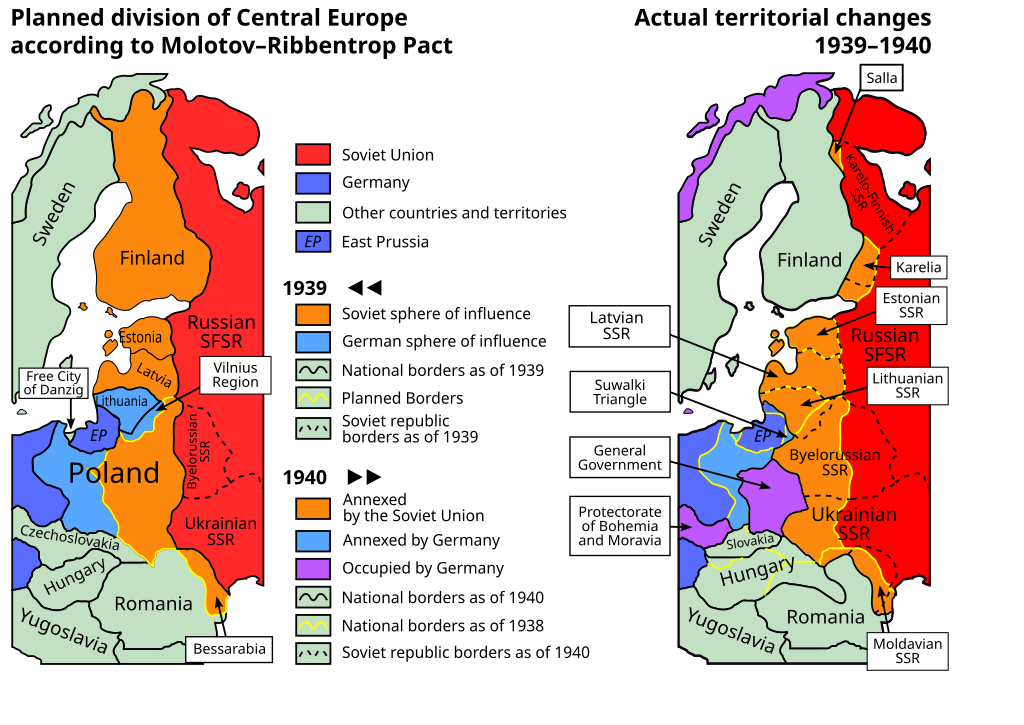
Planned and actual divisions of Europe, according to the Molotov–Ribbentrop Pact, with later adjustments. Sourse: WIKIPEDIA
The turning point in this story came as Mikhail Gorbachev became the leader of the Soviet Union. While attempting to revive the economy of the state, he introduced glasnost (openness) and perestroika (restructuring). For the Lithuanian dissidents and activists, this was a golden opportunity not to be missed! Finally, there was a chance to bring their movements from underground into public life. The first unsanctioned Anti-Soviet rally to condemn the Molotov-Ribbentrop Pact was organized in 1987. A year later intellectuals formed an initiative group of the Lithuanian Reform Movement ( in Lithuania known as Sąjūdis) to mobilize support for democratic change and ultimately - Lithuanian independence. After numerous demonstrations and protests (better known as the Singing revolution), the first democratic election since the Second World War was finally held on 24th February 1990. To no one's surprise, Lithuanian Reform Movement candidates won an overwhelming majority (107 out of 133 seats). The first post-war non-communist government did not waste much time. During their first assembly on March 11, 1990, the Supreme Council of the Republic of Lithuania adopted an Act on the Restoration of the Independent State of Lithuania.
 Leaders of the Supreme Council of Lithuania in Vilnius on 11 March 1990, after the promulgation of the Act of the Re-Establishment of the State of Lithuania. Photographer Paulius Lileikis. Lithuanian Central State Archives. Sourse: WIKIPEDIA
Of course, this was only the beginning. The Soviet Union did not want to recognize our independence right away. They initiated an economic blockade and later tried to stop us with armed forces! But that did not scare Lithuanians. And after months of uncertainty, Lithuania was finally welcomed as a member of the United Nations in 1991!
Since then we have never stopped re-building our country in democratic values. We became members of NATO on 29 March 2004, and later that year joined the EU as well. And 10 years ago we introduced the Euro as our currency. Of course, we had some ups and downs exercising our democratic rights and responsibilities. And we certainly still have a lot of things to achieve. But as the yellow strip on our national flag reminds us every day - the sun and better times are ahead of us.
So come and celebrate freedom with everyone in Lithuania! There’s going to be quite a few free concerts around town.
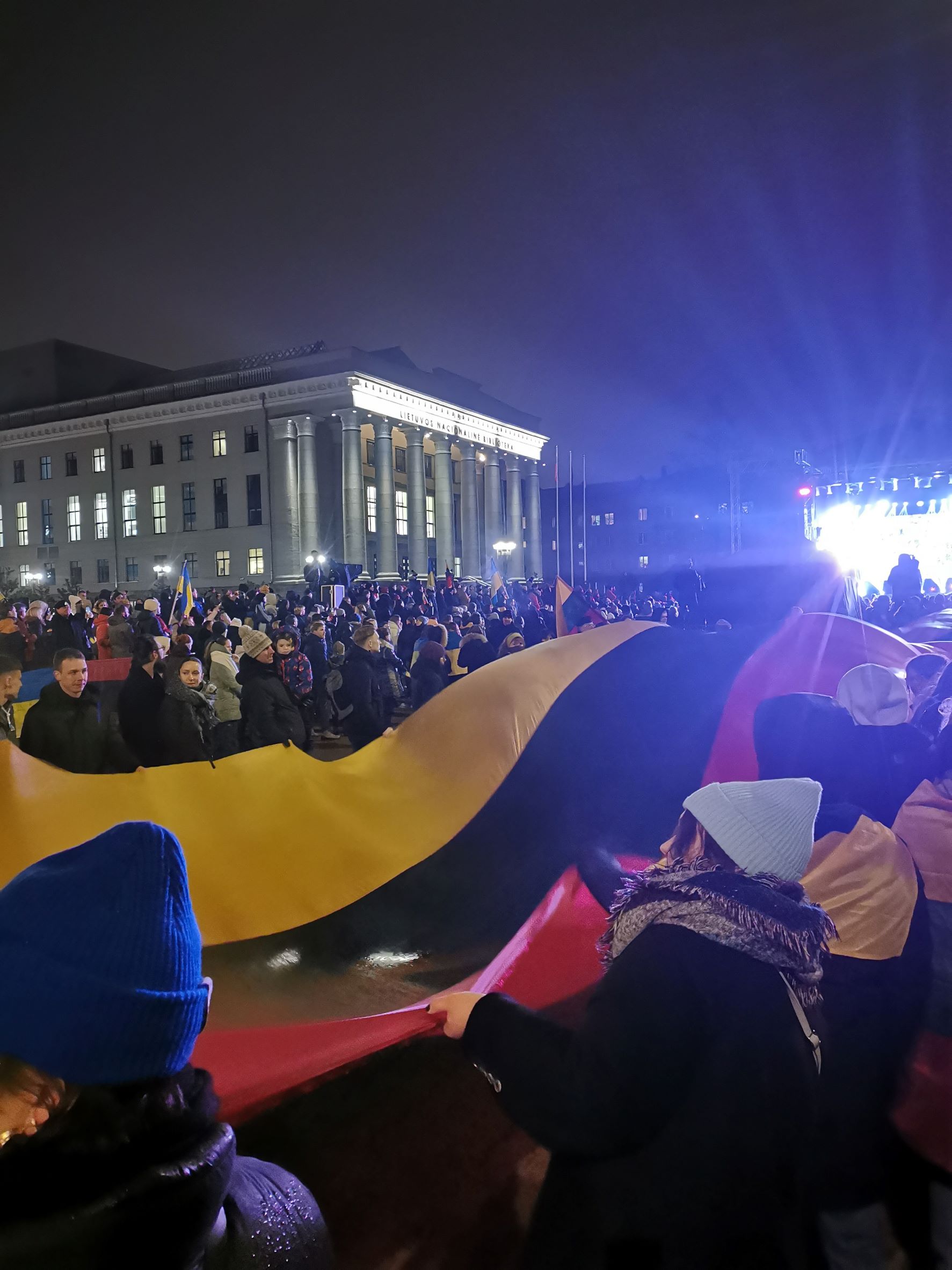
People in Vilnius celebrating Lithuanian Independence day in Independence square. Photo by Ieva B.
Things to do in Vilnius on the independence day! 2026 edition
March 10th from around 7.30 PM - Students of the Lithuanian Military Academy will lit bonfires at Kalnų Park Stalo kalnas to celebrate Lithuania’s Statehood Day. The celebration will begin at 7 PM at Lithuanian Military Academy, where students will gather and march together to Kalnų Park. It's around 30 minute walk and after that there will be live music, dancing, warm porridge and tea at Stalo kalnas.
March 11th Official ceremonies!
12 PM (noon) – Witness the ceremony of raising the flags of the three Baltic States – Lithuania, Latvia, and Estonia – in Independence Square.
12.30 PM – Join the traditional procession from Independence Square to Vilnius Cathedral, featuring the Honor Guard Company of the Lithuanian Armed Forces and the military bands of the three Baltic states. Everyone is welcome!
12.35– 5 PM – Visit the place where history was made: the Lithuanian Parliament (Gedimino av. 53 Vilnius) will be open to visitors!
10 AM - 5PM – Visit Visitors center of Seimas ( Gediminas av. 60) and explore the exhibitions, watch documentaries and historical footage.
Or, simply hop on a local bus and explore the rest of Vilnius as public transportation will be free of charge all day.
Our tour schedule runs as usual. Meet us at 11 AM on the steps of Vilnius Town Hall and discover Vilnius Old Town and Užupis.
Hopefully this blog helped you to understand more about Lithuanian history and gave you ideas how to celebrate it!