
Soon, Lithuania will celebrate one of its significant milestones. February 16th marks the Day of the Restoration of the State of Lithuania, also recognized as one of Lithuania's Independence Days. In this post, we will explain the significance of this day and suggest you how to participate in the celebrations while visiting Vilnius!
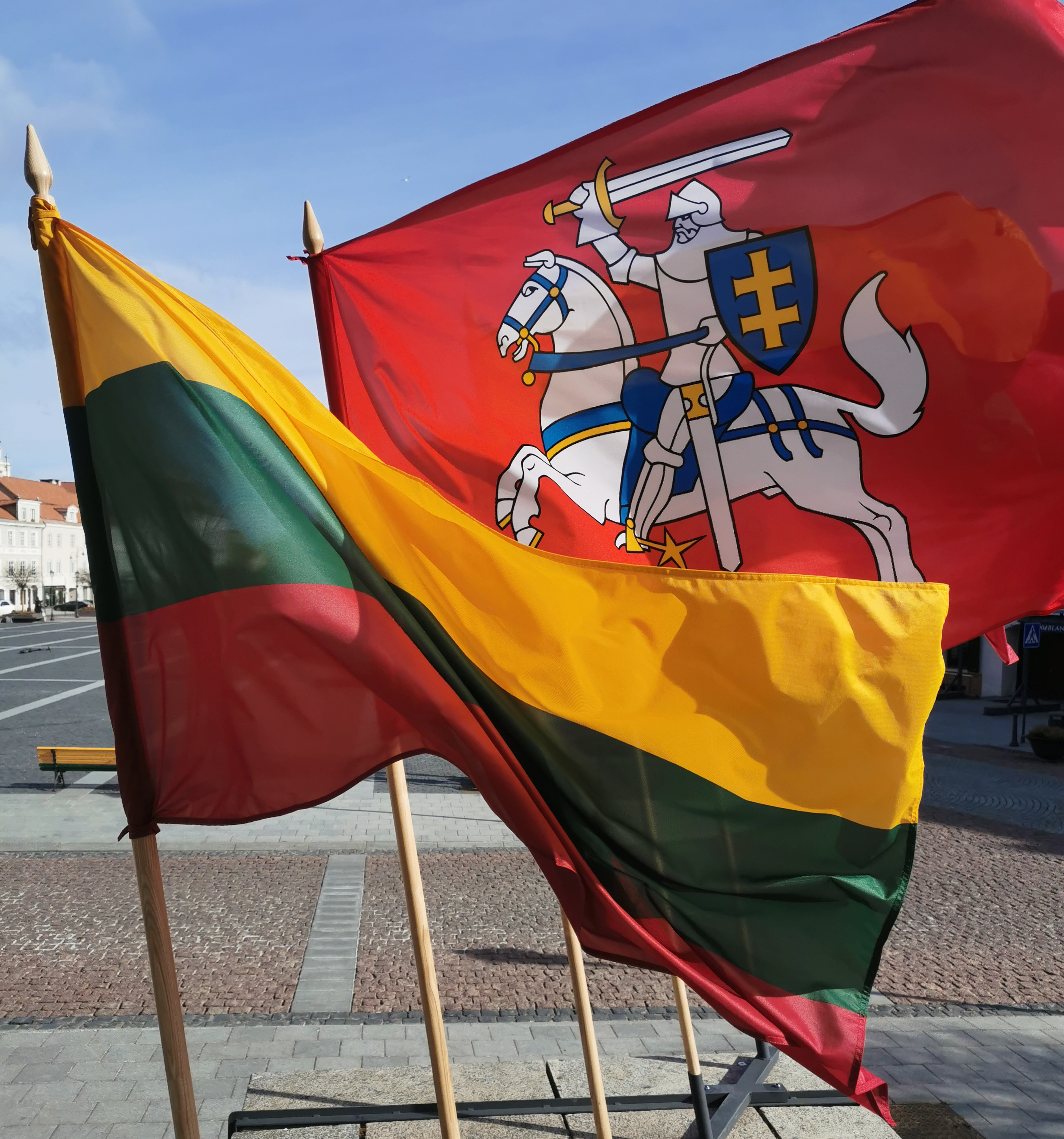
Lithuanian National flag and Lithuanian State (historical) flag displayed in Vilnius Town Hall square. Photo by Ieva B.
History of the day of Restoration of the State of Lithuania (February 16)
Officially this day marks the Restoration of the State of Lithuania. Why restoration? Because Lithuanian people draw their inspiration for the new modern independent state from the historic Grand Duchy of Lithuania (founded in 1253).
But let’s start from the beginning! Since the last Partition of the Polish-Lithuanian Commonwealth in 1795, Lithuania was a part of the Russian Empire for more than 100 years. Even though both Lithuanian and Polish people tried to restore their independence a few times, their first real opportunity arose when both Russia and Germany were weakened during the World War I. During the war Lithuania was taken over by Germany in 1915.
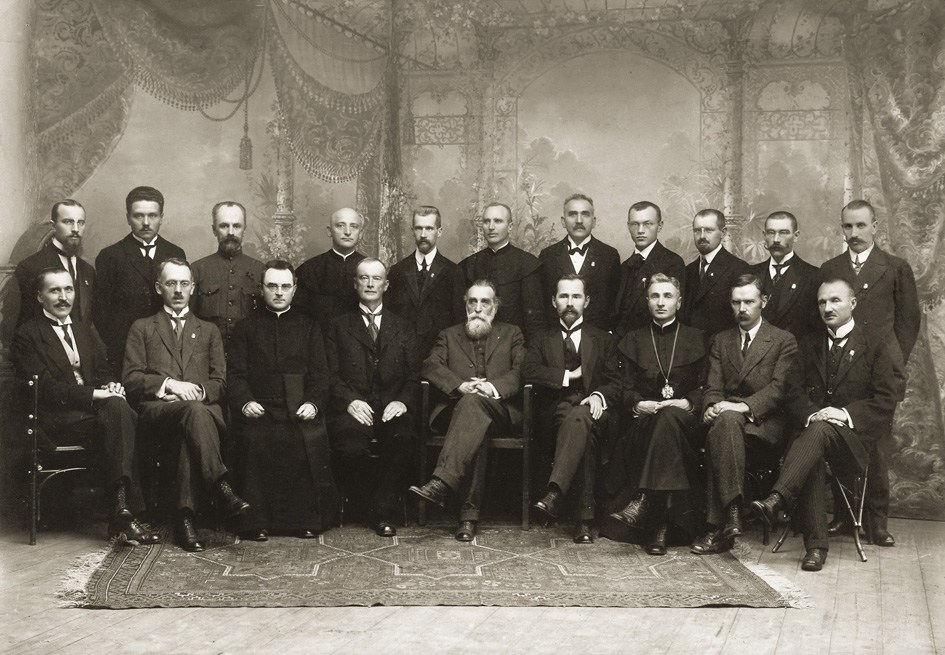 20 men who signed the Act of Reinstating Idependence of Lithuania on 16th of February in 1918
On the 16th of February 1918, the Council of Lithuania (elected in 1917 September) proclaimed the restoration of an independent State of Lithuania, governed by democratic principles, with Vilnius as its capital. Sounds majestic, doesn’t it? You could think that the thousands of people were waiting for this in the streets of Vilnius and a mighty party lasted for a few days.
Well, the reality was much simpler…First of all it was winter, so no parties in the streets. Secondly, most of the Lithuanians didn’t actually knew that any document was signed until much later.
In the early morning on 16th of February, 20 men met in a simple room and signed a piece of paper with a declaration, later known as the Act of Reinstating Independence of Lithuania. However, the publication of the Act was prohibited by the German army authorities present in Lithuania at that time. So the text was distributed and printed illegally. The situation changed only when Germany lost World War I in the fall of 1918. Only then Lithuanian independence became a reality.
Today, you can discover the house and the memorial room where this historical event unfolded at Pilies Street No. 26 in Vilnius Old Town. It's now a museum known as the House of Signatories. During the signing of the declaration, it wasn't an official government building but rather a residence owned by a wealthy merchant. The ground floor housed a restaurant, and the upper floors were rented out as apartments. So, why did the Council of Lithuania choose this location? Well, during the harsh winter and prolonged war, it was one of the few buildings in Vilnius that could afford proper heating. It's a well-known fact that important documents are challenging to sign with freezing fingers!
However, what Lithuanians celebrate now is not one date but the entire century of the success story created by thousands of people – from farmers to sports heroes and politicians. The entire Lithuania and Lithuanians abroad will celebrate it in their own way – by continuing the old traditions and creating the new ones.
How to celebrate Lithuania’s Independence Day in 2026?
Traditionally, this day is marked by formal and informal events such as raising the flags, festive concerts, and numerous speeches. You don't have to be Lithuanian to feel the unique sense of unity and savor the atmosphere of the city of freedom! In the evening, join the celebration on Gediminas Avenue where symbolic bonfires will be lit.
February 16th Celebration Events in Vilnius
10 AM – The traditional Youth March “On the Path of the Lithuanian State” will start in Cathedral Square near the Gediminas Monument. Young people from all over the country will walk through the Old Town to Rasos Cemetery to honor the creators of independent Lithuania, the Signatories of the February 16 Act, and soldiers who died for the country’s freedom.
From 11 AM to 2 PM – creative workshops will take place at the Gediminas Castle Tower Museum, where you will be able to make Lithuanian tricolor bracelets. Special ticket prices: €4 for adults and €2 for discounted tickets.
12 PM – Flag-raising ceremony of the three Baltic States at Simonas Daukantas Square. Speech by the President of the Republic of Lithuania, Gitanas Nausėda.
The Centre for Civil Education ( Totorių str. 28 ) will be open to visitors on February 16th. No registration is required, and admission is free. This modern space offers an interactive way to explore how a democratic state functions and how citizens contribute to its development. Visitors can engage with dynamic exhibits and discover the significance of state symbols and key historical events through themed displays.
NB! The Centre is part of the Presidential Palace, so you will need to go through security and have your bags checked. To save time for yourself and fellow visitors, bring only essential items.
2 PM – Commemoration of February 16th from the balcony of the House of Signatories (Pilies str. 26)
NB! Pilies St. and Jonų St. will be packed with hundreds of people, so if you want to avoid the crowds, consider choosing an alternative route to reach your destination.
The museum will be open and free of charge to the public on both February 16 and February 17.
2 PM – screening of a documentary about the distinguished Lithuanian cultural figure Irena Veisaitė. Having survived the Holocaust and lost her loved ones, but refusing to give in to hatred, she chose forgiveness over revenge, dialogue over silence, and love over hatred, becoming an inspiration to many. The film is shown with English subtitles at Old Town Pasaka.
6 PM – Sixteen bonfires will be lit along Gediminas Avenue, accompanied by performances from local ensembles and musicians. ( From Gediminas Ave. 1 to Vincas Kudirka Square).
From 7 PM – Let’s celebrate Independence together at InVino (Aušros Vartų g. 7)! DJ Tushas will play a mix of Lithuanian songs, you will enjoy Pakruojis Manor drinks and special cocktails, and we will share traditional šakotis cake.
 Photo by Vilniaus kultūros centras
Our tour schedule runs as usual. Meet us at 11 AM on the steps of Vilnius Town Hall and discover Vilnius Old Town and Užupis. At 2 PM, the Soviet Vilnius tour starts at the Gediminas Monument. Please book your spot in advance.
Last but not least, public transport in Vilnius is free of charge for everyone for the entire day!
We hope this post helped you to plan this festice weekend in Vilnius. February 16th holds immense significance in Lithuanian history, but it's not the only Independence Day we commemorate. The upcoming date to mark is March 11th – just a month away. Check our blog post to find out its' history!